

Meeting California's Climate Goals: Creating Pathways for Industrial Decarbonization
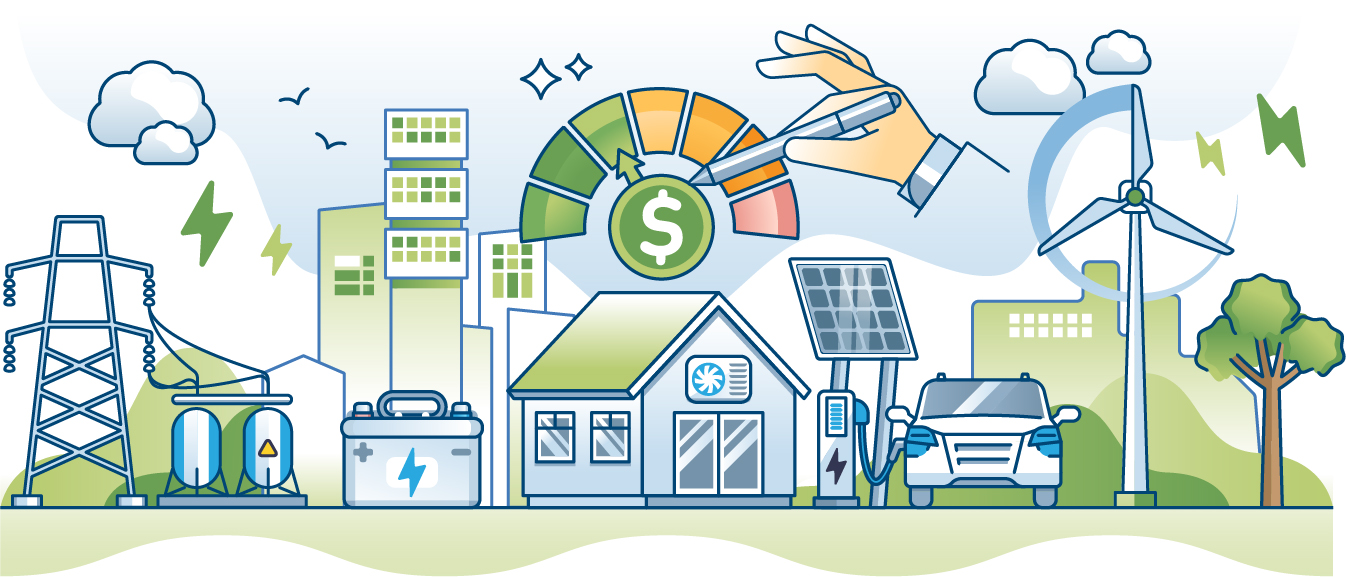
California leads the nation with its goal of reaching economy-wide net zero emissions by 2045. The work of the California Public Utilities Commission (CPUC) includes proactive planning through ongoing proceedings and authorizing clean energy programs that help cut emissions from electricity, buildings, and transportation. Decarbonization efforts in these sectors rely on switching to cleaner power sources or upgrading natural gas technologies to electric ones. In addition, the CPUC plays a role in transforming industrial processes for greater alignment with climate goals and a healthier future.
“We’re just starting to see clean energy technologies that can do what current natural gas equipment does to power industrial activities,” says Leanne Hoadley, Supervisor for Energy Efficiency Planning and Forecasting at the CPUC. “To bridge this gap, the core area we work on is reducing energy use in emissions-intensive industries.”
The CPUC’s strategy supports customers with distinct processes, from food processing to cement grinding. “A lot of operations are very unique to a particular plant, so there is no one size fits all solution,” says Leanne.
Strategic Energy Management
The CPUC’s Strategic Energy Management, or SEM, program offers a unique approach that helps commercial, agricultural, industrial, school/university, or multifamily customers operationalize processes to reduce their energy use in the long-term. Program administrators work directly with customers, developing custom projects that help take advantage of energy efficiency incentives and identify opportunities for continuous improvement across an entire facility. CPUC staff oversee the program to ensure all projects meet eligibility requirements, including cost-effectiveness, prior to installation, as well as facilitate a long-term customer education approach to program implementation.
Examples of industrial sector program solutions include replacing induction motors with permanent magnet motors, variable frequency drives for process fans or blowers, pipe and tank insulation for heated processes, and retrofitting existing equipment to optimize processes. But SEM doesn’t end with these solutions.
A Long-Term Relationship
The long-term approach is what makes SEM unique. Most energy-efficiency programs offer a rebate or incentive for a business to replace a piece of equipment, and that’s the end of the relationship. But the SEM program requires a six-year commitment for customers to participate. Instead of just swapping out equipment, SEM teaches a factory, a farm, or a large commercial building how to manage its energy use the way a good business manages any other operating costs, with goals, data, accountability, and continuous improvement.
For example, one SEM project at a frozen food processing facility not only resulted in lasting energy efficiency upgrades but drove a cultural shift at the site. The solutions identified through the program delivered 4 million kilowatt hours (kWh) in energy reductions over a two-year period along with hundreds of thousands of dollars in value through improved uptime, preventive maintenance, tighter air/gas controls, and more standardized operations. “Treasure hunting” for energy efficiency opportunities is now embedded in daily operations: employees continuously look for and report potential energy waste, reinforcing the idea that ignoring issues like air leaks have real opportunity cost.
Delivering Results
The SEM program’s unique approach has proven effective: in 2024, program administrators expended $50 million for the industrial sector, which resulted in 465.3 million lifecycle electric kWh savings and 113 million lifecycle natural gas savings. This translates to 698K net CO2 in metric tons of emissions savings over the lifetime of the energy efficiency intervention for the industrial sector, or the equivalent of removing nearly 166,000 gas-powered passenger cars from the road for one full year.
Pathways for Progress
By combining energy efficiency with long-term planning and continuous improvement, SEM provides a foundation for the transition of traditionally “harder to abate” industries to low carbon solutions.
The SEM program not only helps customers take advantage of existing energy efficiency technologies, but provides a framework for continuous improvement and customer education in a rapidly evolving space. “Many new technologies are being piloted to decarbonize industrial processes, and once we have proof of concept, the SEM program is the pathway that can help bring them to implementation,” says Leanne.
Through programs that reduce energy use today while preparing customers for the technologies of tomorrow, the CPUC is helping create pathways for California’s industrial sector to become more efficient, resilient, and aligned with the state’s climate goals.
This is the fourth article in the CPUC’s “Meeting California’s Climate Goals Series” exploring the agency’s role in the statewide transition to a carbon-free economy. We highlight the regulatory levers and programs that help position the state on the least-cost path to net zero emissions across the electric, buildings, transportation, and industrial sectors.
By Liza Martin, Public Information Officer
Legal Disclaimer:
EIN Presswire provides this news content "as is" without warranty of any kind. We do not accept any responsibility or liability for the accuracy, content, images, videos, licenses, completeness, legality, or reliability of the information contained in this article. If you have any complaints or copyright issues related to this article, kindly contact the author above.
