

Informing on environment and climate news in the world
Provided by AGP
Role of Environmental Enrichment in Poststroke Functional Recovery
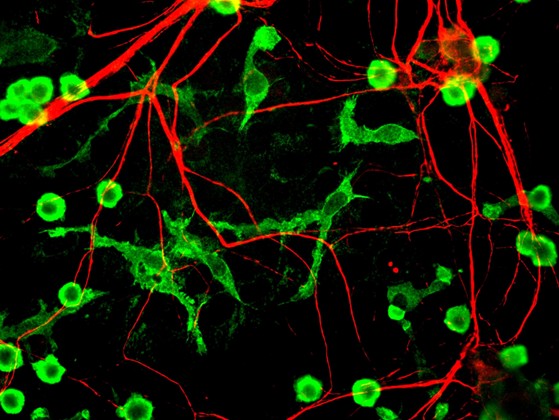
Researchers reveal EE dissociates the positive correlation between infarct size and proinflammatory markers, and highlights white matter TREM2-positive microglia as a potential cellular link to functional recovery.
A new mouse model-based study shows how poststroke environmental enrichment attenuates chronic inflammation, promoting a sustained sensorimotor recovery
CHINA, May 15, 2026 /EINPresswire.com/ -- Environmental enrichment (EE), which involves a combination of voluntary exercise and social interaction has been known to improve poststroke functional recovery. However, its effect on chronic inflammation and white matter pathology remains elusive. Now, a new study reveals that EE improves sensorimotor recovery after stroke while weakening correlation of infarct size with chronic inflammation and myelin damage. It also identifies TREM2-positive microglia in white matter as a potential cellular signal associated with improved functional recovery.Stroke is one of the leading causes of death worldwide. Its recovery is often challenging as most of the stroke survivors remain chronically disabled, with motor deficits affecting a significant percentage of patients. Stroke recovery continues long after the initial injury stabilization. In the early recovery period, during the first weeks after the insult, the brain enters a prolonged phase of repair and inflammation. This chronic response can strongly influence poststroke recovery and long-term disability.
The poststroke recovery environment plays an important role in the healing process. Recent studies suggest that environmental enrichment (EE), a recovery setting that combines greater physical activity, sensory stimulation, and social interaction, can improve recovery. However, how the stimulation affects poststroke brain inflammation and white matter pathology is not well-understood.
To address this, a team of researchers, led by Dr. Lluís Camprubí-Ferrer, from the Experimental Neuroinflammation Laboratory, Lund University, Sweden, conducted an animal-based study to understand the effect of EE on poststroke inflammation, microglial response, and myelin integrity. The study was made available online on February 25, 2026, and was published in Volume 4, Issue 1 of the journal Neuroprotection on March 01, 2026.
“EE is known for exerting beneficial effects on neuroplasticity and recovery after stroke. However, a systemic study on understanding the microglial phenotypes during the recovery period after stroke under enriched housing conditions was lacking. Our study addresses this research gap,” says Dr. Camprubí-Ferrer.
The researchers induced photothrombotic (PT) stroke, a commonly used experimental model that creates a localized injury in the brain, in male mice and randomized mice into standard environment (SE) or to an EE with more space, social contact, exercise opportunities, and frequently changed objects. The mice were then monitored for sensorimotor recovery over 3 weeks. In addition, they examined the brain for signs of microglial activity and myelin damage.
The behavioral findings clearly highlighted the role of EE in PT stroke recovery. Mice housed in EE performed better on tests of paw placement, foot fault, and limb symmetry, with benefits persisting through 21 days after stroke. When the researchers combined these outcomes into an overall neurological score, the EE group showed stronger recovery.
The tissue analysis revealed that in SE mice, larger infarcts were closely linked to stronger chronic inflammatory signals. In addition, larger lesions were associated with more myelin debris around the infarct and greater loss of myelin in white matter. In contrast, in EE mice, the usual link between infarct size and chronic inflammatory markers like galectin‐3 was largely absent. The same was true for myelin debris accumulation and white matter myelin loss. The findings suggest that enrichment weakened the tendency for larger lesions to drive stronger long-term inflammation and tissue disruption.
In white matter, higher levels of triggering receptor expressed on myeloid cells 2 (TREM2)-positive microglia were associated with better neurological recovery in EE mice. No other inflammatory or myelin marker showed such a robust relationship with behavior. This highlights TREM2-positive microglia as a potential cellular link between EE and improved functional recovery.
“Our findings suggest that interventions like EE that targets microglial marker suppression and TREM2 potentiation may contribute to post‐stroke white matter repair and improve functional outcomes,” concludes Dr. Camprubí-Ferrer.
***
Reference
Title of original paper: Environmental enrichment modulates chronic poststroke inflammation and links white matter TREM2-positive microglia in recovery in mice
Journal: Neuroprotection
DOI: 10.1002/nep3.70028
Ningning Wang
Neuroprotection
neeliewong@163.com
Legal Disclaimer:
EIN Presswire provides this news content "as is" without warranty of any kind. We do not accept any responsibility or liability for the accuracy, content, images, videos, licenses, completeness, legality, or reliability of the information contained in this article. If you have any complaints or copyright issues related to this article, kindly contact the author above.
